Tuesday, March 13, 2012

Ain't promisin' nuthin', but...

I need to update this more, I know I do. So, without further ado...actually, hold on. This might be a bit hurried, but I'm just gonna fly some stuff down before I scurry out the door to re-ignite my astro-turf football career.

Last week, I went to a flurry of gigs that I'll proceed to yap away about. The first was Jeff Mangnum in Vicar Street on Wednesday. And, well, to use the parlance of our times, imho, it was...brutal. Now, admittedly, I'd only given the one Neutral Milk Hotel album I have a couple of listens before the gig. I was hanging out with my cousin, hadn't seen him in way too long, and he had a spare ticket. Anyway...

This gig just didn't grab me. But I was definitely in the minority. The masses standing rapt in front of Mangnum at this sold-out(!) show were going daft. Roars of applause followed every ramshackle number, and the crowd sang the tunes they knew with gusto. It struck me that the crowd were just cheering for the songs they recognised from records they revered - not the performance itself. But music is such a subjective thing...maybe this show just wasn't for me.

The following night I went to the Choice Music Prize in the Olympia. The point about music being subjective is brought into sharp focus here - the Choice judges pick Irish 10 albums they feel defined the previous year. The Script have been previous nominees; Fred have not. Like any other awards show, sometimes I heartily agree, sometimes I'm baffled. But, hey, at least it gets people talking. It gets a lot of media exposure in Ireland, which the likes of Bell X1 and Lisa Hannigan may be well used to, but a band like the overlooked Pugwash are not.

All ten nominees performed at this year's event, and the show was opened by Tieranniesaur. For now, I'll just think that I caught them on an off night and yammer away about the performances I enjoyed. (Patrick Kelleher & His Cold Dead Hands -  cool name aside - didn't really knock me out either). 

We Cut Corners were the second band on stage at this year's Choice and, man, were they impressive. A two-piece of guitar and drums, they were a flurry of noise and catchy tunes. Can't wait to see them do a full show.   

And So I Watch You From Afar were another assault of noise, but they don't opt for anything as rudimentary as singing. Instead, the instrumental quartet bound around the stage and almost rip the roof off the Olympia. The drummer's quiff stayed in place for all of 20 seconds. 

Cashier No.9 put on a polished show - if a lot of the bands you love hit their peak in the seventies, then you'll like this Belfast six-piece.  They were among the favourites to win, but it turned out not to be. Also pipped to the prize were Dublin's Pugwash, whose Answers On A Postcard is a real gem.

Bell X1 were slick, but out of the big acts it was Lisa Hannigan who got the biggest response. If there was a straw poll taken in the Olympia, then Passenger would get the nod for album of 2011. But the judges were in a hotel down the road, and when their verdict was announced even the winner was surprised.

Jape frontman Richie Egan doesn't quite know what to say. He manages 'holy shit!' before giving some quick thank-yous. He also said he expected Hannigan to win, but the Choice seems to live to surprise. Yet Jape's Ocean Of Frequency is a peach, and while people may quibble over who should've won or even been nominated, at least the Choice gets the debate going about something that often gets overlooked : homegrown music.

So, that's it for now. And I haven't even finished my Jimi Mc-flurry...Delorentos, last Friday in the Róisín Dubh, oh man! (Although this was shot in Spain!)


Friday, December 2, 2011

Lisa Hannigan, St.George's, Bristol, Sunday 27th November


‘Jesus has the best venues’ says Gavin Glass during his opening slot for Lisa Hannigan at St. George’s, Bristol. A long-time member of Hannigan’s band, Glass is a fine song smith in his own right. His relaxed repartee between songs, which include the sublime Just Like Rome, primes the room for the easeful, yet stirring, show that follows.
St. George’s is an impressive room. High-ceilinged with Greek pillars running along the side, it bequeaths a kind of calm upon an audience but, as the room is full, there’s not a little expectation in the air. This is an artist, after all, who secured a Mercury nomination with her debut. So, can Hannigan surpass Sea Sew?
The answer is a resounding ‘yes.’ From the opening bars of her set to its closing moments, Lisa Hannigan beguils the audience. Charismatic without having to resort to ‘hey it’s great to be here’ schmaltziness, the sheer delight she takes in performing is infectious.
Lille, An Ocean And A Rock and in particular I Don’t Know are all played and sung with aplomb – Lisa’s six piece band add weight and nuance to her songs, and veer away from sameness. But it is the selections from Passenger that show Hannigan is becoming a songwriter of genuine class. Her voice skates and spins around numbers like What’ll I Do and Nowhere To Go.  Donagh Molloy, John Smith and Gavin Glass add harmonies at just the right moments, adding to the songs but letting them breath too.
Knots shows that Hannigan can write the foot-stomping, radio-owning hit she deserves; many in the audience add their own percussion with gusto. A Sail is a subtle, moving gem and Paper House is, to these ears, one of 2011’s most majestic and essential songs.
At the end of the encore, St. George’s is on its feet. Jesus may have the best rooms - but he can’t take credit for the tunes.

Wednesday, November 9, 2011

Sunday, Sunday


How much can you fit into a Sunday?
Sometimes Galway lounges back laconically, and seems to wait for you to do something. Other times, it throws so much at you that it’s hard to know what to do. Neachtains switches from being the city’s sitting room to a place that offers respite from over-stimulation.
Because this town loves a festival. Arts, oysters, horses – whatever’s going, really. Over the October Bank Holiday Weekend, the Galway Theatre Festival and the Galway Comedy Festival took centre stage. Both are relatively new to the scene, but have quickly become fixtures in the city’s cultural calendar.
This year’s Comedy Festival boasted an insanely impressive line-up. Tim Minchin, Rich Hall and Dylan Moran topped the bill, with each of them selling out two shows each. There were also sets from Rubberbandits, Ardal O’Hanlon and David O’Doherty.       
Now in its fourth year, the Galway Theatre Festival was set up by Andrew Flynn and Páraic Breathnach. In 2009, Róisín Stack stepped in as festival director. GTF showcases local talent (which this year included Galway-based companies Mephisto, Tyger and Fregoli), as well as bringing in some emerging national groups. This year there, Stack invited Louise White and Kate Nic Chonaonaigh to put on their show All Things Considered It’s A Nice Place To Start,  which turned heads at this Absolut Fringe festival. Dundalk firebrand Jinx Lennon was making his first foray into theatre with an audio/visual show that incorporated his folk-punk-songs.
I decided to squeeze all my festival shenanigans into one sacrilegiously hyper Sabbath day. Making my way through the drizzle that looms over Galway like an over-protective parent, I land up at the Studio Theatre in the Town Hall. Adventures of a Music Nerd: 1 Guy, 3 World Cups ,written by Corkonian Ronan Leonard, is an affectionate ramble through the Irish World Cup songs of the nineties. The premise is simple – Leonard stands in front of a laptop with a mic, playing snippets of songs – but he is such an amiable host that rarely a moment of the hour long show passes without a chuckle.
With the shower lifted, it was time to leg it down along the Corrib and head towards Áras Na nGael, for the second Theatre Festival show of the evening. Presented by TrueWest Theatre, Before The Devil Knows You’re Dead was co-written by Patrick Collins and John O’Dowd and was making its debut at GTF. The aptness of staging a ghost story was augmented by the novelty of the play being a promenade piece. Two people in dog-masks guided the crowd through the building, bringing them upstairs, downstairs and outside.
The play centred around Conor McDonagh (Jerry Fitzgerald), a reporter at a regional newspaper who is asked to investigate the death of a young farmer who spent big during the Tiger. Although the dialogue in the newsroom scenes was a little clunky in places, Seona Tully put in a well-pitched performance as Ciara Deignan, McDonagh’s more urbane colleague.
But the show was always leaning towards the supernatural, and the show was at its most compelling during these darker scenes. The maverick journo is taken by malevolent fairies into a hellish world that reveals the details of the case. John O’Dowd excels as Michael Cleary, a man who murdered his wife because she believed she ‘gone away from herself.’ Old Irish superstition is melded with modern scenes of farmyard slaughter that play on televisions in the backround, and  the audience is lulled into a chant by one of the spirits. It’s genuinely haunting, and the audience go back on to Dominick Street a little shook, but chuckling murmurs suggest TrueWest have done well here.
Now, it’s time to get stuck into some comedy. Andrew Maxwell brought his Fullmooners show to the Radisson, with a top-heavy bill of Rich Hall, Mike Wilmot and the Rubberbandits.
Maxwell is an anarchic, but extremely relaxed compere. He deftly juggles jokes about the presidential election and midget porn; a software engineer in the crowd called Damien is quickly re-cast as the kid from The Omen. The Dubliner is much better in the flesh than he is on the small screen; his years of experience and enthusiasm for the most demented of tangents elicit belly laughs throughout the evening.
Rich Hall is Maxwell’s first guest of the evening, and his set is a masterclass in deadpan from beginning to end. The election of Michael D. has not flown under the irascible Virginian’s radar, but Hall feels that ‘being the President of Ireland is like calling Budweiser the king of beers.’ The cantankerous persona can’t mask how effortless he makes stand-up look, however. He tells the crowd not to cheer as he leaves the stage, but applause is a knee-jerk reaction to someone like Hall.
After the intermission, Maxwell comes back on and carries on with the ramblings that he peppers the evening with. He invited on Canadian comedian Mike Wilmot, one of the hardest gigging comedian’s going. Wilmot delights in the fact that he can use the word ‘cunt’ without reproach in Ireland, delighting in the way some people use it as a term of affection. He then launches into loving descriptions of his wife’s breasts (they’ve been married for over 20 years) and other material that anyone who’s seen him before will be familiar with. But many in the room are seeing him for the first time, and Wilmot show’s his craft by delivering older material as if it’s brand new. He gets a chorus of deserved whoops when his set ends.
It’s well past midnight but, ladies and gentleman, it’s about to get even darker. Bouncing on stage like something from a delinquent Donnie Darko, Rubberbandits tear through a set of what we can probably now call hits. Their visuals don’t work, but they make light work of the technical mishap with their surreal banter. Was this hitch part of the show? It’s hard to know – these guys are too clever, and way too funny, to buckle under second-guessing.
Eamon DeValera is double-dropping yokes; random figures from Irish public life are outed as being ‘in the ‘RA’; Róisín’s father is challenged to a scrap. This is life according to the Rubberbandits. People are sitting down but the urge to get up and throw some shapes is hard to suppress, with Blindboy  and Mr.Chrome trying to out-rave each other.
            It’s some performance, and the Bandits rough-as-fuck approach is at home in the somewhat shabby venue. But they could play on the back of a truck, and still give a hell of a show. They bring the evening to a close, of course. How could you follow that?
Well, you could go for Sunday: The Directors cut and extend your festival into Monday evening. Earlier that day, a surprise Dylan Moran show was announced in the Róisín Dubh. He normally fills rooms many times the size of the Dominick Street venue, so it’s no surprise that it quickly became the premium ticket of the weekend.
And Moran delivers, in his own spectacularly nonchalant way. He gives the impression of carrying on a discourse whose exact beginning has long been forgotten, and whose end, though inevitable, will never explain what went before it. Moran is a comedian par-excellence, a man who fires out so many immaculate lines that it’s hard to keep up. At one point, we are asked to imagine an Irish rugby team made out of Wagon Wheels, flinging themselves against the corners of Dana’s mind. Both weary and wonderful, Dylan Moran is an artist who may well slap you for calling him one, but that’s what he is.
            So, how much can you fit into a Sunday in Galway? Too much, but not nearly enough.


Friday, September 9, 2011

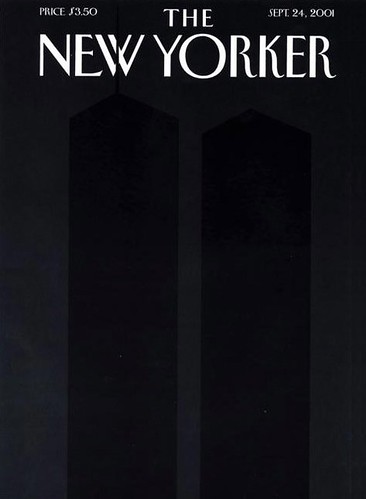
September 11th, 2001


It was a Tuesday.

I had been living in New York for just over three months, on a J1 student visa. Myself and two friends , Peter Dawson and Peter Whelan,  were sharing an apartment on West 125th Street, a few blocks from Harlem's Apollo Theatre. The three of us had gotten jobs through an agency, working as doormen and porters in apartment buildings in Manhattan.

That particular Tuesday, Peter Dawson was in San Francisco. I returned home at around 7 a.m., having just finished the night shift. There was no-one at home at the time; Peter Whelan had probably left to go to his own job. Given that we all worked different shifts throughout the summer, we could often go a day or two without seeing each other.

I woke up at 3pm and decided what to do for the day. I may have listened to some PJ Harvey, Aimee Mann or Gorillaz - the music that soundtracked the J1 summer. Given my 2-CDs-a-week habit, the radio was never on in that apartment. We were lippy 21 year olds who could talk for Ireland, so we never bothered getting a television.

With no one around to hang out with, I decided to go to the cinema. Moulin Rouge was showing, and I felt like it was the type of film that required a big screen and decent speakers. Loews on Times Square seemed a suitable destination.

I walked out of our building on 125th and made straight for the subway station. I didn't stop to talk to anyone,  go into a store or look at a newspaper.

The train pulled into Times Square and I hopped out. A police barrier had closed the street off - not an uncommon occurrence. Perhaps they were diverting traffic, or shooting a movie. Walking up 42nd Street, I began to notice that a lot of businesses were closed. Even the 24 hour internet café next to Madame Tussaud's. 'Something must be up with the electricity' I thought. A power-cut, maybe. It seems daft now, but I distinctly remember hoping that Loew's had a back-up generator. I had nothing to do for the day; the lads were away, and a film would've passed a few hours.

But Loews was closed. Everything was shut. I turned around and went back towards the subway station, passing a man who was preaching fire and brimstone. Again, not an uncommon sight in New York city. But something he said caught my ear. God was punishing us for being wicked -once again, nothing new there - yet the man kept referring to today. Tuesday. God had unleashed his judgement, today.

I walked on, and a few people were looking up at the ticker-tape news coming in. More than normal - in New York, it was considered uncool to look up, unless you were an out-of-towner. But these people didn't look like day-trippers.

The sentence that was curving around the building in red-on-black letters said that one of the Twin Towers was on fire. That was all. It was getting close to 4pm and - I thought - part of the World Trade Centre was burning. I made my way back to the subway; maybeI could go downtown and see the fire before they put it out.

But the stop on 42nd was shut. A notice advised people to walk ten blocks north to the next station, where there were only trains going uptown. Time to go back to 125th, find somewhere in the neighbourhood that had a television. I had been awake for well over and hour now, but still hadn't spoken to a single person. Something had happened, but I had no idea what.

On the carriage uptown, a few people were standing around a man who had been to a one-hour photo shop. He was showing them pictures of what I still thought was a fire at the World Trade Centre. Looking over other people's shoulders, it was hard to see the photos or make out what he was saying. Getting out at my stop, I made my way to the Mexican deli on the corner of our block.

I walked in to a place that, before that day, I remembered for its accelerated air-conditioning and surly service. Above the counter, a small television replayed images that had been playing around the world for the past 8 hours.

A plane crashed into one of the Twin Towers. Then another plane hit the neighbouring one. And then they fell.

And then they fell.

I stood there, watching it happen again and again. New York is the kind of city that often makes you feel as if you're in a movie. But this was something else entirely. What was going on?

Later that evening, Peter Whelan returned from work. For the first time ever in apartment 11, the radio was turned on. All was still confusion, but reactions were coming in apace. Over a six-pack, myself and Peter discussed what had happened, and the day he had while I was sleeping.

He told me that, after his shift, he had gone to the World Trade Centre to volunteer, as he had some training in CPR. But they were only letting in expert emergency crews at that stage. Peter was thinking about going back tomorrow, he said. Although he had to work in the morning, so it was unlikely.

I got up that Wednesday morning and saw Peter in the sitting room. 'Are you going to work?' I asked him. 'I am, yeah,' he said. I said good luck and see you later, and went to work in an apartment building on East 56th Street. That day, I was filling in for one of the doormen.

I sat at the desk and listened to the radio; music was being played to rally people, emergency crews were being exhorted. 'I've just got a call in from some fire-fighters from New Jersey,' said one DJ. 'They were down there today, and they want us to stop calling it Ground Zero and start calling it Ground Hero. So, this is for everyone down at Ground Hero - this is David Bowie, Heroes. God Bless America.'

Several residents of the building stopped to talk to me at the desk. What was that smell, they kept asking. Is the building being evacuated? Should they leave? What was happening? What was that smell? With as much calm as a 21 year old in a white shirt could convey, I told them that I had received no calls, and that I was sure that we'd be told to leave if we had to. But what was that smell?

A little while later Jay, a Puerto Rican man in his fifties who I'd been working with all summer, stood at the desk. That smell, he said, was coming from 50 blocks south, at the bottom of Manhattan. Burning, melting and acrid, it was everywhere.

That evening, I went back home. Peter wasn't around, but sometimes our shifts would cross over and I wouldn't see him for a day or two, occasionally a little longer. We were hired as 'summer relief' in seperate buildings, and our shifts changed on a weekly basis.

I went to a store a block away run by a guy from Yemen. Sometimes we'd talk about girls, and his beer was cheaper than the Mexicans'. As I made my way towards the fridge, he was having a conversation with a customer about the attacks. They were both saying how tragic it was, shaking their heads. Then the customer shrugged his shoulders and pointed a finger towards the man behind the counter. 'No offence, bro, but it was your people that did this. Your people, man.'

Back in the flat, for the first time that summer, I began to think about my flight back home. Three weeks away, not too long. I couldn't believe it, but I wanted to leave Manhattan.

The next day, Thursday, I went to work again. In a surreal way, New York was getting back to business. Hawkers were already selling commemorative T-shirts. I came home in the evening - there was still no sign of Peter. I was getting a little concerned, but thought maybe he had hit the town. Or, charmer that he was, maybe he'd met a girl. Good for him.

But he hadn't returned by lunchtime the next day, and now I was worried. It was a Friday and I was off work. We had no cell-phones and I didn't have the address of the building where Peter worked. I was the only person in Manhattan that knew him.

Walking into the nearest precinct, I was greeted by a cop in his thirties. I told him that my friend might be missing.

'Has this got anything to do with the events of Tuesday, sir?' ( The words 'nine-eleven' had yet to find their way into 21st century parlance.)
'No. He volunteered to help, but they turned him away. The last time I saw him was Wednesday, he said he was going to work.'
'And are you related to this man?'
'I'm not, no.'
'Well, then you can't file a missing person's report, sir.'
'But his family are in Ireland - we're here on student visas. I'm worried that he's been mugged or hurt, I don't know what to do.'
'Sir, have you called St. Vincent's?' (The hospital closest to the Twin Towers.)
'But this has nothing to with Tuesday - he went to work!'
'Sir, just call St. Vincent's. If he's not there, come back and we'll see if we can help you.'

I found a payphone, wanting only to get through the formality of making the call, so I could return to the station and ask that cop to help me find my friend.
Someone answered. I asked for Peter Whelan. They asked me to repeat it. I did. Then they asked me to spell it. I did. They asked me for the spelling, again. I gave it to them.

They put me on hold. A man's voice answered, groggy.

'Hello?'
'Hi, I'm looking for Peter.'
'Yes.'
'Peter Whelan.'
'This is Peter Whelan. Who's this?'
'Who's this? Who's this! It's Jimi, man, where are you? I thought you were dead!'

Peter sounded rough, said he'd explain what happened when I got there. He gave me the name of the ward he was in, and asked if I'd bring the New York Times and the latest Newsweek or Time.

I got on the subway; my first trip downtown since the attacks. I got out at Canal Street. There were jets in the air, and smoke in the distance. On the corner of the street, a man was holding a placard that said 'War Is Not The Answer.' A truck carrying rubble stopped in front of him. An arm jabbed out, followed by a head hurling insults.

'Hey buddy - you're a fuckin' asshole! Get that sign off you! I've been hauling shit out of there all day. Bodies, man! That sign is bullshit, you're a fuckin' asshole!'

I bought the papers Peter asked for and made my way to St.Vincents. There was a bus-stop in front of the hospital, covered in pictures of missing people. Details of lives emerged - this guy worked on the 96th floor of  Tower One; this man had a tattoo with his wife's name on his right shoulder; this woman had a particular kind of bracelet.

Earlier that day, Mayor Giuliani had said that the chances of finding any more survivors were extremely slim. Most of the people on that bus-stop weren't coming home.

I went in to St.Vincent's and followed the signs to Peter's ward. There he was, lying on a bed, sharing the room with another patient.

We had spent the summer playing chess, heading to bars, putting the world to rights and laughing. Now, here he was, looking pale, but alive. It was good to see him.

Peter told me what had happened. He hadn't gone to work on Wednesday, and had returned to volunteer. As he was standing on Christopher Street, waiting for word on what was happening, a truck passed by. Peter felt a jab in his stomach. He lifted his shirt; he was bleeding from a small cut, but wasn't in too much pain. He walked over to a cop, and showed him the cut. An ambulance was called. It took a while, obviously, but Peter wasn't in agony.

One came, and took him the short distance to St.Vincent's. They brought him into a room and gave him an x-ray. It came back, and next thing he was flying down the hallway on a gurney. 'Sir, something has pierced your stomach lining. It might have hit an artery. You may lose part of your colon.'

Blackout.

So, here he is, two days later, metal shard removed , arteries and colon intact, in a St. Vincent's ward. Peter's room mate is eye-balling me from his bed a few feet away. A John Wayne movie about a burning oil rig plays on the TV pulled close to his bed. I look at Peter and nod my heads towards his beardy neighbour.  Peter turns to him and says 'It's OK, man. This is my friend.' The beardy Wayne fan goes to close his curtain but, before he does, he stares at  me again. 'OK. But I'm just looking after my buddy, mister.'

Myself and Peter opt to conduct any further conversations in French. My compatriot would like to go for a cigarette. A nurse brings a wheelchair and I wheel Mr.Whelan outside. He's had to make a few phone calls, but his J1 insurance will cover the operation. We go back to his ward, where The Duke is still (loudly) fighting the flames.

Over the next few days, I return to visit Peter and his room-mate - who, I find out en francais , is a homeless man that got hurt in a fight. Peter makes a quick recovery and is out by the end of the weekend.

'Wanted' posters of Osama Bin Laden, from the Daily News, are put up in subway stations by maintenance crews. People sit on the train wearing similar looking t-shirts of the Al-Qaeda leader with the words 'wanted: dead or alive' underneath his face. The word 'alive' is crossed out.

It is a Tuesday, the 18th of September, a week after 9/11. It is also my 22nd birthday. Myself and my convalescing friend go to a bar in Greenwich Village. Just as we enter, a woman gets up from her seat at the bar and glides past us, out the door, on roller-skates.

We head off after a couple of cocktails. The barman paid for the Long Island Ice Teas after hearing that it was my birthday,  and that I come from Galway. Turns out he used to work in a bar on Quay Street, and spent a year there.

Myself and Peter then find ourselves in a small bar with maybe ten people in it. We have a beer and a yap, but stay away from the well-stocked jukeboxes you find in the city's dives. In pubs dotted around Manhattan, me and the two Peters had spent the summer singing along to Pogues, U2 and old soul tunes. But, for obvious reasons, the third Tuesday in September, 2001 wasn't that kind of night.

A man comes into the bar, orders a beer and goes to put his hand in his pocket. The barman puts down the glass he's cleaning and looks at him.

'What are you, kidding me? You don't pay for beer here anymore, buddy. This one's on me.'

A firefighter is now standing at the bar, drinking his beer and trying, perhaps, to ignore the fact that everyone in the room is looking at him. And is soon insisting that they too will buy him a drink. He quietly declines several rounds.

'So, how are you doing man?' asks the bartender.

Everyone's listening. He doesn't talk for too long, only says that it's a mess 'down there' and that he's lost a lot of friends. Another bottle is placed on the bar. He's said as much as he wants to now; there'll be no more backslapping or 'hey, this one's on me.'

Looking back now, the two weeks after that night seem to shoot by. But I do remember looking at the calendar, waiting for the day of my flight out of JFK. The intensity of the grief and loss in the city was now being matched by the desire for revenge,with the Duke Bush promising to 'smoke them out of their holes.' The hawks were circling.

Time to go home.

It was a Monday. The plane touched down in Shannon. I met my father in the arrivals hall, wearing the first suit I ever bought with my own money. The accents around me sounded strange, the colour scheme seemed off. Then, that feeling - the kind that's hard to shake.

I was missing New York.

Monday, August 29, 2011

Elbow, Belsonic Festival, Belfast, Wednesday August 24th


The question is - how to improve a year during which you've seen both Prince and Elbow?

Given that the purple Minneapolitan has re-ascended to Planet Funk, it's unlikely we'll see him again too soon. But, just in case he's reading, he's always welcome. Loads of room, Mr.Nelson, come on in. Nice threads, by the way.

So, right now, there can only be one answer to that question -

Go see Elbow. Again.

This year's Belsonic festival saw Belfast's Custom House Square play host to Tinie Tempah, Tiesto, Plan B and Beady Eye. On Friday 19th August Primal Scream, as they have been doing all summer,  asked 'just what is it that you want to do?'  Oh, and Jared Leto and his band played too. They have lovely hair.

But a rainy Wednesday in August heralded the arrival of Elbow to Belfast. It was lashing down during Foy Vance's set, which could be heard from under the awning of McHugh's. Adam Hoy (who said he'd read the blog if I mentioned him - so, here you go!) reckoned he might wait until the main act came on. If I was a fan of bad puns, I would've said 'Hoy, you! Don't miss Villagers.' But I hold myself to impeccable standards. Impeccable.

Which is a word that befits Villagers. Conor O'Brien played some new tunes, which are of the same standard as the older ones. Roll on album number two.

Now, at the risk of repeating what I said in April, let me briefly take you through the Elbow show. They kicked off with The Birds and stayed airborne thereafter. Guy Garvey chose a different member of the band to name-check after every song, referring to all of them (affectionately!) as 'lovely fuckers.' He sang a Gene Kelly/Frank Sinatra number, a cappella. Quite simply, he's an effortless front man - or at least, he makes it look easy.

Which, of course, it isn't. From their lyrics to their arrangements, Elbow put a lot of thought, and no small amount of heart, into what they do. They're the type of band you have to see once, and as many times more as you can manage. Carla and Barry from Bray had seen them back in March, and a few times previous. As this is written, they're en route to see Elbow in New York. Bon voyage, keep me posted!

Great Expecations and a euphoric  Station Approach are aired, as well as newer material like Neat Little Rows and the quietly beautiful Lippy Kids. But it's the Seldom Seen Kid that points the way home. Elbow finish with the sublime double whammy of Starlings and One Day Like This. Ah, stop - pure magic!

What makes you stand in a square and run the risk of getting drenched? Why would you cross the Atlantic to see a band you've seen several times before?

I can only think it must be love.
Well, anyway.....


Friday, August 19, 2011

Flash fiction, folks!

Hi folks,

I have a  story in the latest edition of Wordlegs. Have a look at it here.

Tuesday, August 16, 2011

Little John Nee & The Highly Strung Orchestra


Tuam: a small town in North Galway - not the kind of place that always brings magic to mind yet, at a certain time every August, there seems to be a glut of it. This year's Earwig Arts Festival (12th to 21st) began with a cracking street show, followed the next day by a visual arts trail around the town.  There are also performances by local actors, musicians and writers.

Last Sunday in The Mall theatre, Little John Nee aired his latest piece The Mother's Arms. The show began with John and The Highly Strung Orchestra entering at the back of the room and walking to the stage. They were making a shuffling din that sounded like the start of a Tom Waits song - but the comparisons end there.

Welcome to Planet Nee.

Our host pointed to two miniature chairs at the front of the stage, and lamented the tension created by waiting for these two punters. The audience were invited to shake their limbs and relax, and soon found themselves in in The Mother's Arms, a pub in a forlorn, rainy corner of Donegal. 

A bluebell, bereaving the loss of his beloved, perishes in a pool of beer slops. A hippy with a history extols the virtues of love and organic vegetables. Taxi Mc Dermott, behind the wheel of a '59 Ford Zodiac that also carries the members of his band, parks outside the pub. He wants a gig, bed, board - and perhaps more.

The Mother's Arms is a show littered with wonderful moments. There's a 70 year old woman who describes the details of her recently acquired tatoos. Then there's Rose, the pub's landlady who managed to escape a Deliverance like fate in Florida. At one stage, two headlights were raised over our host's head as he took on the persona of a boy racer. Little John, a man that can sing, write, act - and rap. Like a demon!

Praise has to be given to Nee's collaborators on this show. Jeremy Howard, Andrew Galvin and Orlaith Gilcreest form the Highly Strung Orchestra and are given typically colourful new names - somewhere in the world, I really hope there's a man called Hayzeus O'Donnell. The trio play piano, sax, clarinet, guitar, bazoukis, petrol cans and more throughout the performance. And cluck like chickens. It would be great to hear this music on an album - there are some serious hooks in here. Also, 'do the Mahatma Gandhi / and let in the light' is a contender for lyric of the year.

But The Mother's Arms has to be seen in the flesh. When Taxi McDermott and his band come around again, don't miss them. I could yammer away quite happily about this show - but sometimes you just run out of adjectives. So, indulge me dear reader as I paraphrase a little known American artist.

'You could've seen Tom Waits for €120 in The Phoenix Park
You could've seen Little John in The Mall for a tenner

And though it's my opinion
I may be right or wrong
You'll find them both
In the Grand Canyon
At sundown.'